Read The Latest News From Us
Blog Details


Shop 13 to 15, Shri Hanuman Nagar, Jaipur, Rajasthan, 302013, India
info@saakaarorganicindia.com

Read The Latest News From Us

Every year, India generates over 62 million tonnes of municipal solid waste, and a significant portion of this comes from agricultural and rural sources — crop residues, animal waste, kitchen scraps, and organic by-products. Much of this ends up in landfills, open dumpsites, or is burned in fields, contributing to air pollution and greenhouse gas emissions. But what if this waste could become the foundation of a thriving, sustainable farming system?
The waste-to-wealth model in sustainable farming is built on a simple but powerful principle: every organic waste stream is a resource waiting to be utilized. Through composting, vermicomposting, biogas production, and integrated organic farming, India's agricultural waste can be transformed into valuable inputs that enrich the soil, generate energy, and create income for farming communities.
The Scale of India's Agricultural Waste Challenge
India produces approximately 500 million tonnes of agricultural residue annually. Rice straw, wheat stalks, sugarcane bagasse, cotton stalks, and mustard residues are among the most common types. Conventionally, farmers resort to field burning to clear residues quickly before the next sowing season. This practice alone contributes to severe air quality crises in northern India every winter, while also destroying valuable organic matter that could nourish the soil.
Animal husbandry adds another dimension to the waste equation. India's 300 million cattle produce enormous quantities of dung — over 1.2 billion tonnes annually. When properly managed through vermicomposting and biogas systems, this waste becomes a powerhouse of organic nutrition and renewable energy. The challenge has always been infrastructure, awareness, and market access — exactly the gaps that organizations like SOIL are working to fill.
Waste is only waste when we waste it. When a farmer's crop residue becomes compost, when kitchen scraps feed earthworms, when cow dung powers a biogas plant — that is the moment waste transforms into wealth, and sustainability becomes profitable.
Composting: Turning Field Waste Into Farm Gold
Composting is the most accessible entry point for waste-to-wealth farming. Agricultural residues like rice straw, wheat stalks, and vegetable waste can be composted through windrow, pit, or bin methods. The resulting compost is rich in organic carbon, beneficial microbes, and slow-release nutrients that improve soil structure and fertility over time.
Properly composted agricultural residue returns 60-70% of its nutrient content to the soil, significantly reducing the need for synthetic fertilizer inputs in subsequent cropping seasons.
Composting reduces waste volume by 50-70%, making waste management easier for farms and villages while eliminating the harmful practice of crop residue burning.
High-quality compost commands ₹5-₹12 per kilogram in the market, creating a direct revenue stream from what was previously considered worthless waste material.
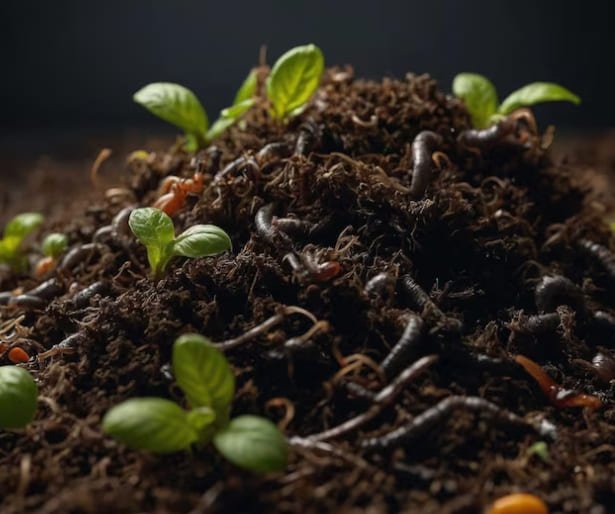
At SOIL, we promote integrated waste management at the village level. Our franchise units collect agricultural residues, cow dung, and organic kitchen waste from the surrounding community. Through vermicomposting and traditional composting techniques, this waste is converted into premium organic manure that is sold back to the same farming community — closing the loop and creating a self-sustaining cycle of waste-to-wealth transformation.
The biogas dimension adds another layer of value. Small-scale biogas plants can convert cattle dung and organic waste into cooking gas and bio-slurry — a nutrient-rich liquid fertilizer. A single household biogas plant can meet 60-70% of a family's cooking energy needs while producing fertilizer that replaces chemical alternatives. For rural households spending ₹500-₹1,000 monthly on cooking fuel, this represents substantial savings.
Building a Circular Economy at the Village Level
The true potential of waste-to-wealth farming lies in creating a circular economy where nothing is wasted. In this model, crop residues become compost, cow dung becomes vermicompost and biogas, biogas slurry becomes fertilizer, healthier soil produces better crops, and the cycle continues. Each element feeds into the next, creating a self-reinforcing system that becomes more productive and efficient over time.
SOIL's franchise model is designed to establish these circular systems at the village level. Each franchise unit acts as the hub — collecting waste, processing it into value-added products, and distributing the outputs back to the community. This model not only solves the waste management challenge but also creates employment, improves soil health, and generates rural income — all simultaneously.
India's future lies in sustainable farming practices that respect the interconnectedness of soil, water, plants, animals, and humans. By embracing waste-to-wealth principles, Indian agriculture can become truly circular — where every output becomes an input, every problem becomes an opportunity, and every village becomes a model of self-sufficient, environmentally responsible farming. At SOIL, we are building this future, one village at a time.

Saakaar Organic India Lakshya Pvt. Ltd.
Transforming Indian agriculture through organic farming, vermicompost enterprise, and rural empowerment — one village at a time.
10 September 2026
Why Organic Farming Is India's Sustainable Future Revolution05 September 2026
How Vermicompost Creates Rural Opportunities01 September 2026
Waste To Wealth Through Sustainable Farming